ARK 2030 Home

Category

Food Systems & AgriTech

6 articles

Outpacing the Leaf: The American Push to Engineer Photosynthesis Beyond Nature's Design

Outpacing the Leaf: The American Push to Engineer Photosynthesis Beyond Nature's Design

Natural photosynthesis, the biochemical engine that has powered life on Earth for three billion years, converts sunlight to chemical energy with surprisingly modest efficiency—typically less than two percent under real-world field conditions. A growing coalition of American researchers believes that number is not a ceiling but a starting point, and is engineering alternative pathways capable of doing far better. The race to build a more productive leaf may be the most consequential agricultural

Machines Without Appetite: Engineering Industrial AI That Operates on Principles Foreign to Human Motivation

Machines Without Appetite: Engineering Industrial AI That Operates on Principles Foreign to Human Motivation

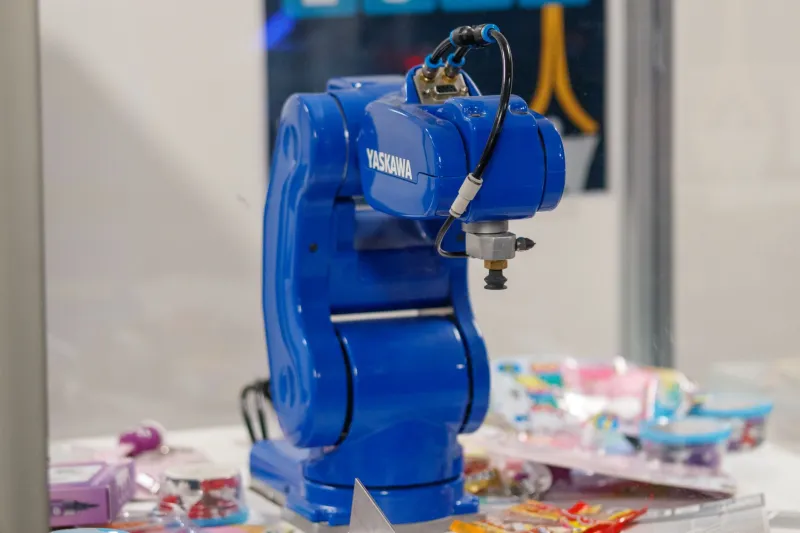
Across American manufacturing facilities, a quiet debate is reshaping how autonomous systems are designed — not around what machines should do, but around what they should want. A growing cohort of researchers argues that truly ethical industrial automation requires engineering AI systems whose motivational architectures bear no resemblance to human drives, eliminating the risk of machines that subtly replicate the hoarding, competitive, and self-preserving tendencies encoded in human-derived tr

Ground-Level Defense: The Microbial Engineering Frontier at the Heart of America's Climate Strategy

Ground-Level Defense: The Microbial Engineering Frontier at the Heart of America's Climate Strategy

Beneath America's agricultural heartland, a largely invisible biological system is being studied—and increasingly engineered—as a potential cornerstone of national climate strategy. Researchers developing designer microbial consortia believe that the soil microbiome could outpace conventional carbon capture technologies in both scale and cost-effectiveness, provided that science, regulation, and agricultural practice can align before 2030.

Beneath the Surface: How American Scientists Are Turning Farmland Into a Carbon Archive

Beneath the Surface: How American Scientists Are Turning Farmland Into a Carbon Archive

A new generation of soil scientists is deliberately redesigning the biological architecture beneath American farmland to trap carbon underground for centuries. From USDA-backed mycorrhizal research to university-led biochar composites, the field of engineered soil ecology is emerging as one of the most consequential — and least discussed — climate interventions of the coming decade. The question is no longer whether living soils can sequester carbon at scale, but whether the science can move fas

Underground Intelligence: America's Race to Map the Microbial Networks That Feed the World

Underground Intelligence: America's Race to Map the Microbial Networks That Feed the World

Beneath every acre of American farmland lies a civilization older than agriculture itself — a dense, dynamic web of bacteria, fungi, and archaea that quietly governs crop yields, carbon storage, and ecosystem resilience. A new generation of US researchers, armed with genomic sequencers and distributed sensor arrays, are finally learning to read it. What they discover before 2030 could fundamentally alter how America grows food and manages its land.

Growing Up: 7 Vertical Farming Breakthroughs Quietly Rewiring America's Food Future

Growing Up: 7 Vertical Farming Breakthroughs Quietly Rewiring America's Food Future

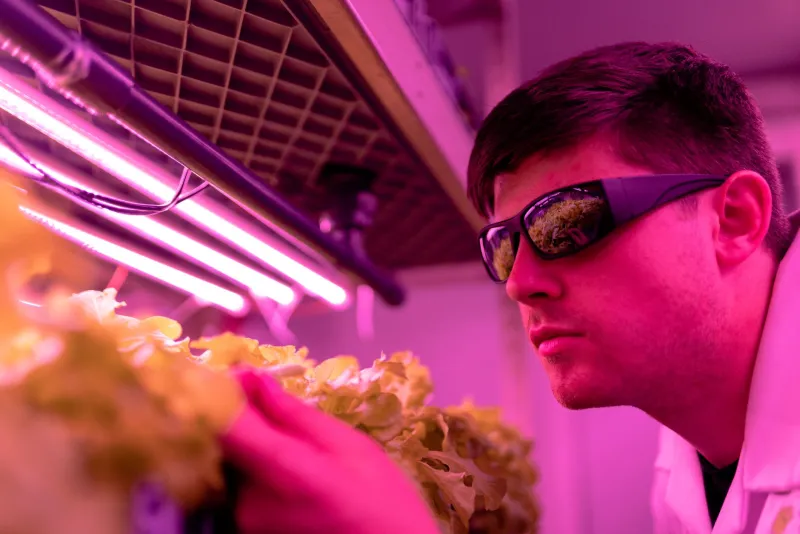
Controlled-environment agriculture has spent years promising to transform how Americans eat — and for much of that time, the promises outpaced the results. That calculus is now shifting. From AI-guided crop management to radically new growing substrates, a wave of genuinely scalable innovations is moving out of university greenhouses and into commercial supply chains, with real implications for food security in a warming climate.